
Build the budget around your intended use
Ask for a written separation of land, transaction costs, construction, interiors, landscaping and recurring charges. Establish which shared facilities are included and which attract separate charges. For retirement planning, also allow for accessibility changes, transport and everyday support.
A land-only purchase and a completed home are different investments. The cost of a building should not automatically be assumed to grow at the same rate as the land. Maintenance and future refurbishment can also affect the amount a buyer is willing to pay.
A hypothetical land-only example
The following is an educational illustration, not Navile pricing or a forecast. Assume land costs ₹60 lakh, upfront transaction/legal costs are ₹4.8 lakh, annual upkeep is ₹60,000 and selling costs are 2% of the final price. The ₹4.8 lakh is an assumed allowance, not a statutory tax rate. Upkeep is constant and paid at each year-end.
There is no loan, construction, farming income or rental income. Figures are nominal, before tax and inflation. Each calculation assumes a buyer completes the sale at the stated year-end. Actual values may fall and a sale may take longer.
| Assumed yearly land growth | 5-year sale value | 5-year profit after costs | 10-year sale value | 10-year profit after costs |
|---|---|---|---|---|
| 0% | ₹60.00L | −₹9.00L | ₹60.00L | −₹12.00L |
| 4% | ₹73.00L | ₹3.74L | ₹88.81L | ₹16.24L |
| 8% | ₹88.16L | ₹18.60L | ₹129.54L | ₹56.14L |
| 12% | ₹105.74L | ₹35.83L | ₹186.35L | ₹111.82L |
What changes when you add a home?
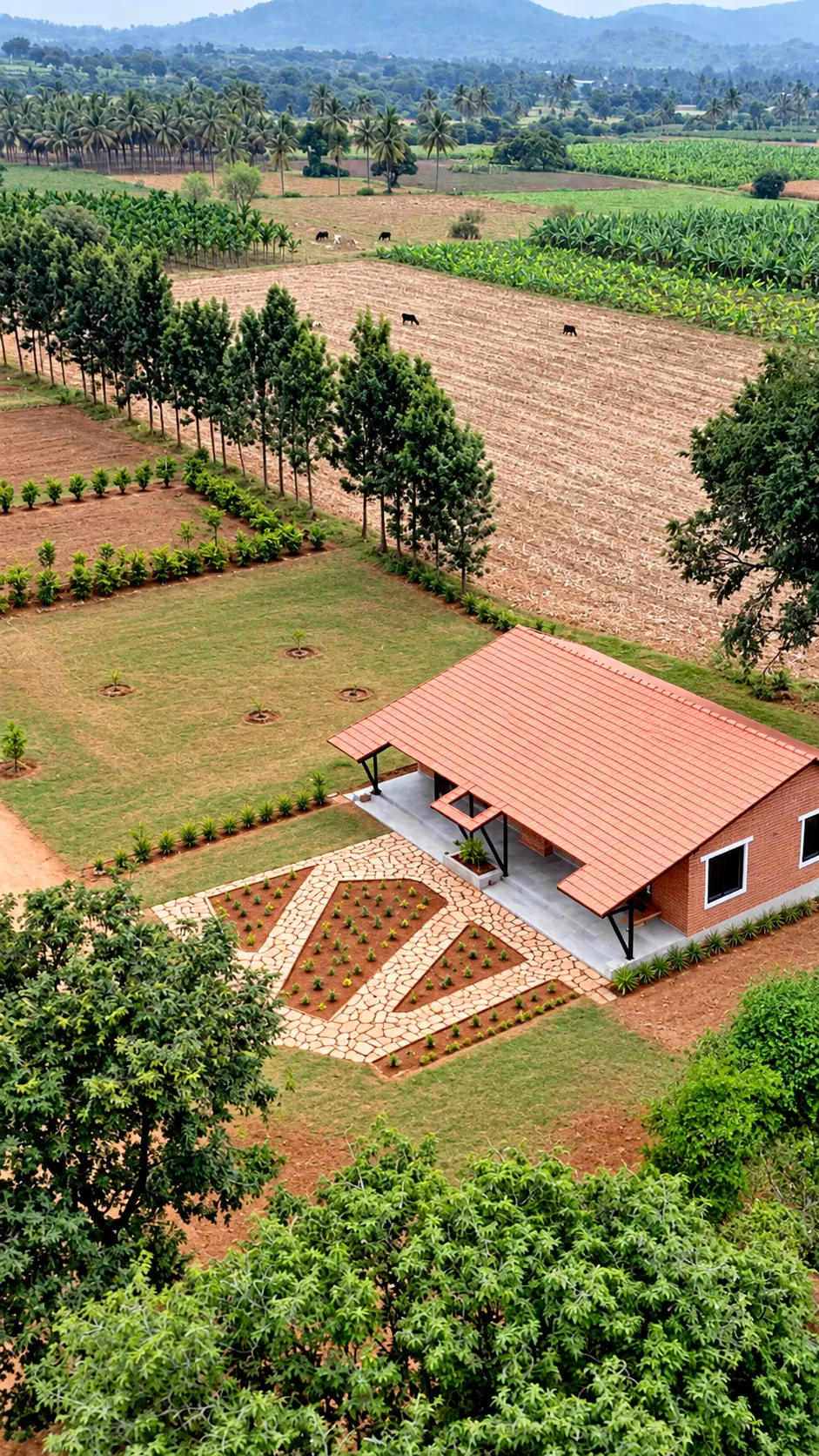
For a separate hypothetical example, add ₹40 lakh for a completed, furnished home at the start. Total initial spending becomes ₹104.8 lakh and annual upkeep becomes ₹1.2 lakh. Assume land grows at 8% a year, while the building's resale value declines 2% a year. Keep selling costs at 2% of the combined value. These are modelling choices, not valuations or a package quotation.
With those assumptions, the combined sale value is ₹124.32 lakh after five years, leaving ₹11.03 lakh profit after the assumed costs. At ten years the sale value is ₹162.22 lakh and profit is ₹42.17 lakh. Both figures exclude tax, inflation, borrowing and rental income. Renovations, cost increases or a different resale value would change the result.
The home example produces less financial profit than the land-only example at the same assumed land growth. It also provides personal use during ownership. That enjoyment is a separate benefit; it is not investment income.
Appreciation is not your annual investment return
In the land-only illustration, 8% annual land growth translates to approximately 5.09% annualised investor return over five years or 6.26% over ten years after the assumed costs. These calculations account for the timing of annual maintenance payments. They are not promised returns.
Net cash profit is the sale proceeds after selling costs, less the initial purchase and transaction costs and all upkeep. If considering a rental business, create a separate model with permissions, construction, occupancy, nightly rates, platform fees, staffing, cleaning, repairs and tax. Do not assume hosting income will fund a retirement plan.
Take a cost checklist on your visit
Use a Navile visit to compare the setting and available plot or home concepts. Request a current, itemised quotation and recurring-cost schedule. Replace every assumption in your own budget with a verified figure before making a commitment.
- What is included in the price, and what is charged separately?
- Who is responsible for maintenance, and can charges change?
- What evidence supports any resale or income estimate?
- Could you afford to hold the property longer than planned?